importance of stencil in Printed circuit board assembly
Stencil plays a crucial role in the assembly of printed circuit boards (PCBs), significantly influencing the quality and efficiency of the manufacturing process. As a fundamental tool in PCB assembly, the stencil serves as a template for accurately applying solder paste onto the PCB, ensuring precise placement of surface mount components (SMCs). Its importance cannot be overstated, as it directly impacts the reliability, functionality, and overall performance of electronic devices.
One of the primary functions of the stencil is to facilitate the deposition of solder paste onto the PCB’s solder pads. These solder pads are where the electrical connections between the components and the printed circuit board assembly manufacturer are established. By using a stencil, manufacturers can achieve consistent and uniform application of solder paste, which is essential for ensuring reliable solder joints during the reflow soldering process. Without a stencil, manual application of solder paste would be prone to inconsistencies and errors, leading to soldering defects such as bridging, insufficient solder volume, or misalignment of components.
Accuracy is paramount in PCB assembly, especially with the miniaturization of electronic components and the increasing complexity of circuit designs. Stencils are manufactured using advanced techniques such as laser cutting or chemical etching, which ensure precise replication of the PCB’s solder pads onto the stencil material. This precision allows for tight tolerances and fine pitch components to be accommodated, enabling manufacturers to produce high-density PCBs with minimal risk of defects.
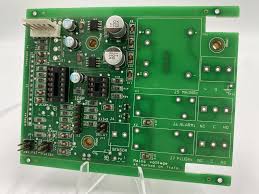
What is the importance of stencil in Printed circuit board assembly manufacturer?
In addition to promoting accuracy, stencils also enhance the efficiency of the assembly process. By automating the solder paste deposition step, stencils enable manufacturers to achieve higher throughput and consistency compared to manual methods. Automated stencil printers precisely transfer the solder paste onto the PCB in a fraction of the time it would take to do so manually, thereby reducing production cycle times and increasing overall productivity. This efficiency is particularly valuable in high-volume manufacturing environments where speed and cost-effectiveness are critical.
Furthermore, stencils play a vital role in ensuring the integrity of the solder joints formed during reflow soldering. Proper solder paste deposition, facilitated by the stencil, results in well-defined solder fillets that provide strong mechanical and electrical connections between the components and the PCB. This is essential for withstanding the stresses and environmental conditions that electronic devices may encounter during their operational lifespan. A reliable stencil ensures consistent soldering quality across all PCBs, minimizing the risk of defects and rework, which can be costly and time-consuming.
Moreover, stencils contribute to the overall reliability and longevity of electronic devices. Consistent soldering quality, achieved through the use of stencils, reduces the likelihood of solder joint failures, such as open circuits or solder cracks, which can lead to device malfunctions or failures. By ensuring robust electrical connections between components and the PCB, stencils help enhance the reliability and performance of electronic products, thereby improving customer satisfaction and brand reputation.
In conclusion, the importance of stencils in PCB assembly cannot be overstated. From facilitating precise solder paste deposition to enhancing efficiency and promoting soldering quality, stencils are indispensable tools for manufacturers seeking to produce high-quality, reliable electronic devices. As technology advances and the demand for smaller, more powerful electronic products grows, the role of stencils in PCB assembly will continue to be vital in meeting the evolving needs of the electronics industry.