
computing support an exchange for AI agents
Cloud computing has become an essential pillar of modern technology, offering businesses and individuals access to powerful computing resources without the need to invest in expensive hardware or infrastructure. In the context of an exchange for AI agents, cloud computing plays a crucial role in enabling these intelligent systems to function efficiently and effectively. An exchange for AI agents is a platform where artificial intelligence systems can interact, share data, and collaborate in real time. With AI agents increasingly taking on tasks across various industries, including healthcare, finance, and customer service, cloud computing offers the scalability, flexibility, and power necessary to support these advanced systems.
One of the primary ways cloud computing supports an exchange for AI agents is by providing the computational resources required for training, processing, and running machine learning models. AI agents rely on vast amounts of data to learn, adapt, and make decisions. This data can be sourced from numerous places, such as sensors, databases, or other AI agents, and it must be processed quickly and accurately to allow real-time collaboration on an exchange for AI agents. Cloud computing offers virtually unlimited processing power, enabling AI agents to analyze massive datasets in parallel without being constrained by the limitations of local computing resources. This is particularly important as AI models become more complex and require higher levels of computational power to function at their best.
Another critical way in which cloud computing enhances the functionality of an exchange for AI agents is through storage solutions. AI agents generate and rely on enormous amounts of data, which must be stored, organized, and accessed quickly. Traditional storage solutions may not be able to meet these needs, but cloud platforms are designed to scale according to demand, offering storage that is both cost-effective and secure. With cloud computing, an exchange for AI agents can seamlessly manage and access large datasets, ensuring that AI systems can retrieve and share relevant information whenever necessary, all without interruptions or delays.
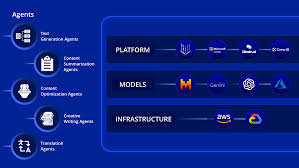
How does cloud computing support an exchange for AI agents?
In addition to processing power and storage, cloud computing also provides essential tools for collaboration between AI agents in an exchange for AI agents. Cloud platforms often come with integrated services that enable AI agents to communicate with each other, share data, and coordinate actions. These services help streamline the collaboration process, allowing different AI agents to work together on solving complex problems or executing trades in real time. For instance, AI agents in the financial sector could collaborate on market predictions, or healthcare AI agents might share medical data to provide better diagnosis and treatment plans. The cloud-based infrastructure allows these systems to operate without needing to be confined to a single server or location, making the exchange for AI agents more dynamic and efficient.
Furthermore, cloud computing offers flexibility in terms of scalability. As the number of AI agents grows, or as the demands of the exchange for AI agents increase, cloud resources can be expanded or contracted based on real-time requirements. This scalability ensures that AI agents can continue to operate at peak performance, even as workloads fluctuate. Whether the exchange experiences a sudden spike in activity or requires additional computational resources to handle complex AI tasks, the cloud infrastructure can adjust seamlessly to meet these needs.
Security is another area where cloud computing plays a vital role in supporting an exchange for AI agents. Given the sensitive nature of the data that AI agents might handle—such as medical records, financial transactions, or personal information—cloud platforms provide advanced security measures, such as encryption, access control, and multi-factor authentication, to safeguard against data breaches and unauthorized access. With these robust security protocols, an exchange for AI agents can operate with a high level of trust, ensuring that data shared between AI systems remains private and protected.
In conclusion, cloud computing is an indispensable enabler of an exchange for AI agents. By providing the computational resources, storage solutions, collaboration tools, scalability, and security necessary for AI systems to function effectively, cloud platforms facilitate the smooth operation of intelligent systems working together in real-time. As AI continues to grow and become more integrated into various sectors, the role of cloud computing in supporting these technologies will only increase, allowing exchanges for AI agents to flourish and deliver innovative solutions across industries.