Get Good at Piano Transcriptions
There is a lot to learn when playing the piano, and it can feel overwhelming at times. But if you keep learning the right things in the right way, it will eventually start to feel much more natural and less like a foreign language. This is when the different skills you have learned begin to fit together and support each other.
One of the first and most important things to get good at is learning to read sheet music. The logical system of reading musical notation isn’t hard to grasp, but it does take time to learn. It is a bit like learning to read in general; it takes time and dedication to get to proficiency but with consistent practice it will soon become automatic.
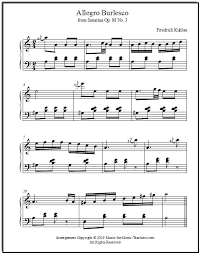
On a piece of music you will see rows of lines and spaces, these are called ‘music staffs’ and they represent the pitches of each note. There are two main music staffs, treble and bass clefs. The treble clef has lines for the higher notes and the bass clef has spaces for the lower notes. It may help to look at a piece of music with a music teacher or find video tutorials online to help you understand what each line and space represents.
How to Get Good at Piano Transcriptions
Once you have mastered how to read music you can then start to focus on the rhythm and phrasing. It can be very difficult to rehearse rhythms on the piano, so it is best to listen to the original song or piece of music and try to capture its feel and sound in your head. Then when you are practicing, try to recreate that same sound with your fingers. This will train your fingers to identify the different rhythms and they will eventually learn to play them without even thinking!
You will also need to be able to read the tempo markings which are found on the top of the score. These indicate how fast, slow or steady a piece of music should be played. For example, allegro (brisk), presto (very fast), molto (slowly) or grave (slow/solemn). Lastly, you will need to know how to use chords in your songs. Chords are groups of notes that need to be played at the same time and they are often indicated by a series of letters (ACGD).
Luckily, there are some simple rules to transcribing music that you can follow that will help make the process a lot easier! First, you’ll want to find a high-quality version of the song that you’re trying to transcribe. Having the best quality possible will give you a clearer sound and help you pick out details that might be difficult to hear in lower-quality versions of the song. It’s also important to work in a quiet space, away from distractions and with a good pair of headphones so that you can listen to the music as clearly as possible.
Finding the right chords can sometimes be a bit tricky, but there are plenty of resources available online and on flowkey to help you get started. For beginners, it is important to choose a song that fits their skill level. This will avoid them getting bored and frustrated and it will help them make progress more quickly. On flowkey, all songs that are suitable for beginners are marked with a green corner.