printed circuit boards manufacturers
Printed circuit boards (PCBs) are fundamental to the functioning of modern electronic devices, serving as the platform for connecting various components and ensuring the proper flow of electrical signals. The materials used in the construction of PCBs are crucial for their performance, durability, and reliability. Printed circuit boards manufacturers utilize a variety of materials to create PCBs that meet the specific needs of different applications, ranging from consumer electronics to automotive, telecommunications, and medical devices. The selection of materials depends on factors such as the complexity of the design, electrical properties, cost, and environmental conditions in which the PCB will operate.
The most commonly used material for the base of printed circuit boards is a composite of epoxy resin and fiberglass, known as FR4. FR4 is favored by printed circuit boards manufacturers due to its excellent balance of electrical insulation properties, mechanical strength, and affordability. It is a versatile material that works well for most standard applications, providing stability and durability in a wide range of environments. FR4 is especially suitable for rigid PCBs, where the need for strength and heat resistance is critical. This material is also resistant to moisture and chemicals, making it ideal for use in harsh environments.
In addition to FR4, printed circuit boards manufacturers also use a variety of other base materials depending on the specific requirements of the PCB. For instance, when flexibility is needed, manufacturers often turn to flexible substrates like polyimide. Flexible PCBs are essential in applications where the board must bend or conform to space constraints, such as in wearable devices or flexible displays. Polyimide offers excellent thermal stability, resistance to chemicals, and flexibility, allowing manufacturers to create thin, lightweight PCBs that can be bent and shaped without losing their integrity.
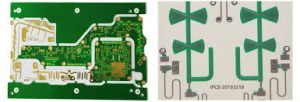
What materials do printed circuit boards manufacturers use?
For high-performance applications, printed circuit boards manufacturers often use high-frequency materials such as PTFE (polytetrafluoroethylene) or ceramic-based materials. These materials are used in PCBs that need to operate at high frequencies or in conditions where signal integrity is crucial. PTFE, often referred to as Teflon, has low dielectric loss and high thermal stability, making it ideal for RF (radio frequency) and microwave applications. Ceramic-based materials, on the other hand, offer even greater thermal conductivity and dielectric properties, making them suitable for high-power and high-frequency applications, such as in telecommunications and aerospace industries.
Another critical material used by printed circuit boards manufacturers is copper. Copper is used to create the conductive traces that connect the various components on the PCB. It is chosen for its excellent electrical conductivity, which allows for efficient signal transmission. The copper layer is typically laminated onto the PCB substrate and then etched to form the desired circuit pattern. The thickness of the copper layer can vary depending on the requirements of the PCB, with thicker layers being used for high-current applications and thinner layers for more standard designs.
Printed circuit boards manufacturers also consider the choice of surface finish when selecting materials for PCB production. The surface finish plays a significant role in the durability, solderability, and overall quality of the board. Common surface finishes include HASL (Hot Air Solder Leveling), ENIG (Electroless Nickel/Immersion Gold), and OSP (Organic Solderability Preservative). Each of these finishes offers different benefits, such as corrosion resistance, improved solderability, and enhanced electrical performance, depending on the specific application.
In addition to these materials, printed circuit boards manufacturers may use additional components like solder masks, silkscreens, and vias. Solder masks, usually made of epoxy or liquid photo-imageable (LPI) materials, provide insulation and protect the copper traces from oxidation and solder bridging. Silkscreens, typically applied using a layer of ink, are used to label components and provide other visual markers on the board. Vias, which are small holes drilled into the PCB, allow for electrical connections between different layers in multi-layer PCBs.
In conclusion, printed circuit boards manufacturers use a wide range of materials to produce high-quality PCBs that meet the diverse needs of their clients. From the standard FR4 substrate to specialized materials like polyimide, PTFE, and copper, each material is selected based on the specific requirements of the application, such as flexibility, thermal stability, and electrical conductivity. The careful selection and combination of these materials ensure that the final PCB performs reliably and efficiently in its intended environment.